Buying Used Mowers
Stand-On vs. Zero-Turn Mowers: Which Is Better for Your Lawn Care Business?
For most lawn care businesses, the better mower depends on the properties being serviced. Choose a stand-on mower for tighter access, frequent stops, slopes, smaller properties, and limited trailer space. Choose a zero-turn mower for larger open lawns, long mowing runs, wider decks, seated comfort, and established resale demand.
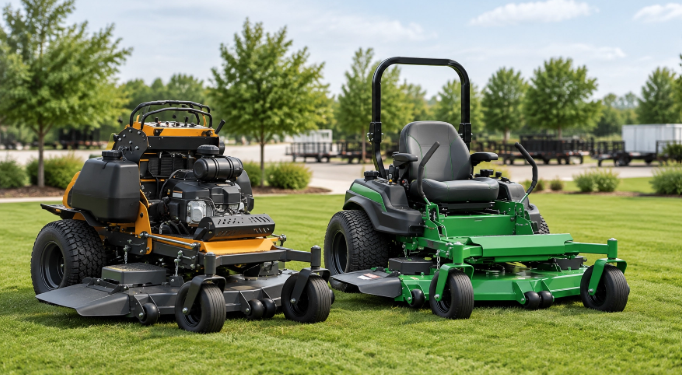
Stand-On vs. Zero-Turn Mowers: Which Is Better for Your Lawn Care Business?
For most lawn care businesses, the better mower depends on the properties being serviced. Choose a stand-on mower for tighter access, frequent stops, slopes, smaller properties, and limited trailer space. Choose a zero-turn mower for larger open lawns, long mowing runs, wider decks, seated comfort, and established resale demand.
Many commercial fleets use both. A stand-on mower can handle gated residential properties and complex commercial sites, while a zero-turn mower covers large, open turf more efficiently.
Compare Stand-On and Zero-Turn Mowers
The table below provides a practical starting point. Exact features vary by manufacturer, model, deck size, engine, condition, and year.
| Factor | Stand-On Mower | Zero-Turn Mower |
|---|---|---|
| Deck widths | Compact to wide commercial configurations are available. Smaller footprints are common. | Compact, mid-size, and wide commercial deck configurations are available. |
| Engine options | Gasoline engine choices vary by model and manufacturer. Verify service access and parts availability. | Gasoline engine options vary widely, including configurations intended for extended commercial use. |
| Transport footprint | Typically shorter and narrower, with lower transport weight on many models. | Typically larger and heavier, requiring more trailer space. |
| Operator comfort | Quick mounting and dismounting. Standing can reduce some back pressure but may increase leg fatigue during long shifts. | Seated operation is often more comfortable for extended mowing periods. Seat suspension and armrest features vary. |
| Visibility | Forward standing position can improve visibility around the deck, trees, beds, and structures. | Seated position provides a familiar operating layout with good visibility across open turf. |
| Maneuverability | Often easier to use in narrow gates, tight yards, and obstacle-heavy properties. | Excellent turning control on open lawns but may require more room around gates and obstacles. |
| Price | Typical used prices vary widely. Comparable stand-on models may have a lower purchase cost, depending on age and condition. | Typical used prices vary widely. Larger decks, features, and strong demand can affect pricing. |
| Best fit | Small to medium properties, slopes, tight access, frequent stops, compact crews. | Large open properties, long mowing runs, wide turf areas, seated comfort. |
Choose Stand-On Mowers for Tight Access and Frequent Stops
Stand-on mowers are a practical choice when a route includes gates, landscaping beds, trees, sidewalks, slopes, and other obstacles. The compact design can reduce the space needed to move between areas of a property.
Stand-on advantages
- Smaller transport footprint. A stand-on mower may leave more room for additional equipment on a trailer.
- Quick mounting and dismounting. Operators can step off to move debris, open gates, inspect an area, or reposition around an obstacle.
- Forward visibility. The standing position can make it easier to see the cutting deck and surrounding obstacles.
- Tight maneuvering. A compact wheelbase can be useful around trees, beds, fences, and buildings.
- Slope control. Many operators prefer the ability to shift body position on uneven ground. The option to step off may also provide additional control in certain situations.
- Lower transport weight. Depending on the model, a stand-on mower may reduce trailer loading demands.
A stand-on mower can make sense for solo operators who work on varied residential routes. It can also fit crew-based businesses that need to move several machines on one trailer.
The main trade-off is operator comfort. Standing may be easier on the back for some users, but long shifts can place more demand on the legs and feet. Test the machine for the length of a typical route before standardizing a fleet around it.
Choose Zero-Turn Mowers for Open Turf and Long Runs
Zero-turn mowers are usually the stronger choice for large, open, and relatively flat properties. Commercial campuses, athletic fields, large estates, municipal areas, and expansive residential lawns can allow the operator to make longer passes without frequent stops.
Zero-turn advantages
- Seated operation. A seat is often preferred for multi-hour mowing shifts.
- Large deck availability. Wider commercial decks can reduce the number of passes on open turf.
- Operator comfort features. Suspension seats, armrests, adjustable controls, and other features vary by model.
- Established service networks. Popular commercial zero-turn brands may have broad dealer and parts support in many regions.
- Resale demand. Commercial zero-turn mowers can attract buyers in the used equipment market, although resale value depends on brand, condition, hours, service history, and local demand.
- Bagging and collection options. Zero-turn platforms may offer larger or more developed collection options for properties that require clipping control.
Zero-turn mowers also have limitations. They typically require more trailer space and may not fit through narrow gates. Their larger size can make them less efficient on small properties where the operator spends more time positioning the mower than cutting grass.
When comparing commercial zero turn mowers for sale, look beyond deck width. Consider the actual property layout, the length of each mowing shift, and the service support available for the model.
Match the Mower to Your Route
The stand on vs zero turn mower decision should start with route data rather than brand preference.
Review the following factors:
Property size
Stand-ons often fit routes with small and medium lawns, especially when properties include several obstacles. Zero-turn mowers become more useful as open mowing areas increase.
A business servicing many small properties may lose time loading, unloading, and repositioning a large zero-turn mower. A business servicing large open accounts may lose production time using a compact stand-on mower with a smaller deck.
Gate and backyard access
Measure the narrowest gates on regular accounts. Include the width needed for the mower, operator position, and safe clearance.
A mower that cannot reach the backyard is not useful for that account. Stand-on models can be a better fit where access is limited, but exact machine dimensions should always be checked before purchase.
Trailer capacity
Compare the machine’s length, width, weight, and loading position with the current trailer setup. Account for other equipment such as trimmers, blowers, fuel containers, ramps, and spare parts.
A compact stand-on mower may allow a crew to carry more equipment. A larger zero-turn mower may require a heavier trailer or a different loading arrangement.
Operator fatigue
Consider how long operators remain on the mower each day.
Stand-ons can work well when a route includes frequent stops and short mowing sections. Zero-turn mowers are often more comfortable for long periods of continuous operation. Crew feedback matters, especially when equipment will be used throughout the workweek.
Crew structure
A solo operator may prefer one versatile mower that handles most accounts. A larger company may benefit from assigning different machines to different crews or property types.
A mixed fleet can include stand-on mowers for gated and obstacle-heavy properties and zero-turn mowers for large open accounts.
Buying Used Commercial Mowers
Used commercial mowers can provide access to professional equipment at a lower entry cost, but condition is more important than the listing price.
Use this inspection process when comparing stand on mowers for sale, used commercial mowers, and zero turn mowers for sale.
1. Check hours and maintenance records
Ask for engine hours and clarification about how the mower was used. Commercial operation is expected for commercial equipment, but neglected maintenance can create expensive problems.
Look for records showing:
- Engine oil and filter changes
- Hydraulic fluid and filter service
- Blade and spindle maintenance
- Belt replacement
- Battery replacement
- Cooling system cleaning
- Repairs to the deck, frame, or controls
A complete service history is more useful than a low hour reading without supporting records.
2. Inspect the deck and frame
The deck affects cut quality and repair cost. Check for cracks, weld repairs, heavy corrosion, bent edges, damaged discharge components, and missing guards.
Inspect spindle areas for play or rough bearings. Look underneath the deck for impact damage. Check deck wheels, lift components, and height adjustments for excessive wear.
On a stand-on mower, inspect the operator platform, hinges, suspension components, and frame around the standing area. On a zero-turn mower, inspect the front caster forks, seat suspension, armrests, and frame near the front axle.
3. Evaluate the engine and hydraulics
Start the mower cold when possible. Watch for hard starting, excessive smoke, unusual vibration, or warning lights.
Check for leaks around the engine, hydraulic pumps, wheel motors, hoses, and fittings. During operation, listen for unusual hydraulic noise and verify that the mower accelerates, turns, and stops smoothly.
Confirm that replacement parts and service support are available for the engine and hydrostatic system.
4. Complete a test drive
Test the mower on both pavement and grass when permitted.
Check that:
- The mower tracks straight.
- Steering controls respond evenly.
- The parking brake holds.
- The blades engage without unusual vibration.
- The deck raises and lowers correctly.
- Safety interlocks operate correctly.
- The machine does not pull sharply to one side.
- Controls remain comfortable in the normal operating position.
Do not judge a used mower only while it is parked. Many problems appear under load or after the mower reaches operating temperature.
5. Compare the seller and warranty
A dealer may offer inspection support, service records, financing options, or limited commercial warranty coverage. A private seller may offer a lower asking price, but the buyer generally has more responsibility for inspection and repairs.
Ask what warranty applies, whether it covers commercial use, and whether the warranty transfers to the next owner. Confirm all terms in writing.
Lawn care businesses can also use the LMC dealer directory to identify equipment dealers and service providers in available markets.
Consider Total Operating Cost
Purchase price is only one part of the decision.
Estimate the total cost of ownership by reviewing:
- Expected maintenance and repair needs
- Replacement deck and spindle costs
- Tire and belt wear
- Fuel use
- Trailer requirements
- Operator productivity
- Parts availability
- Service distance
- Potential resale value
A lower-priced mower may require more immediate repairs. A more expensive model may offer better support or stronger demand in the used market. Neither format is automatically less expensive in every business.
Compare several listings with similar hours, age, deck configuration, and service history. Typical used prices vary widely depending on condition, hours, region, brand, and demand.
Plan for the Current Season
September can be a useful planning period for fleet decisions. Northern lawn care businesses may be reviewing end-of-season performance, preparing winter maintenance, or planning upgrades before the next mowing season. Southern businesses may continue operating year-round and need equipment that can enter service immediately.
Use current route data to identify the next equipment gap:
- More access to tight backyards may support a stand-on purchase.
- More large commercial contracts may support a zero-turn purchase.
- Limited trailer capacity may favor a compact platform.
- Operator fatigue on long runs may favor a seated machine.
- A mixed route may justify keeping both formats available.
Final Recommendation
Choose stand-on mowers when compact access, visibility, quick dismounting, slopes, and trailer space are major concerns. Choose zero-turn mowers when the business depends on long seated shifts, larger decks, open properties, established service support, and strong used-market demand.
For mixed commercial routes, a combination of both mower types may provide the most practical coverage. Review your properties, measure your access points, inspect used equipment carefully, and compare the full operating cost before buying.
Browse commercial mowers on LawnMowerClassifieds.com.
SEO Package
- Category: Commercial Mowers / Lawn Care Businesses
- Primary Keyword: stand on mowers for sale
- Secondary Keywords: commercial zero turn mowers, commercial zero turn mowers for sale, stand on vs zero turn mower, zero turn mowers for sale, used commercial mowers
- Search Intent: Commercial buyer research
- Target Audience: Lawn care professionals, landscaping business owners, fleet managers, commercial mower buyers, dealers, and mower flippers
- Excerpt: Compare stand-on and zero-turn mowers for commercial lawn care. Review access, trailer space, operator comfort, deck options, used equipment inspections, and route fit before buying.
- SEO Title: Stand-On vs. Zero-Turn Mowers for Lawn Care Businesses
- Meta Description: Compare stand-on and zero-turn mowers for commercial work. Review route fit, access, comfort, trailer space, used equipment, and fleet costs.
- Featured Image Idea: A commercial stand-on mower and zero-turn mower shown side by side on a maintained commercial lawn.
- Featured Image Alt Text: Commercial stand-on and zero-turn mowers compared on a maintained lawn
- Suggested Internal Links: