Buying Used Mowers
Is It Better to Buy a Used Mower from a Dealer or a Private Seller?
There is no universally better option. A dealer may offer more accountability, service history, inspection, and limited support. A private seller may offer a lower price, more negotiating room, and direct information about how the mower was used. The private sale also places more inspection and repair risk on the buyer.
Is It Better to Buy a Used Mower from a Dealer or a Private Seller?
There is no universally better option. A dealer may offer more accountability, service history, inspection, and limited support. A private seller may offer a lower price, more negotiating room, and direct information about how the mower was used. The private sale also places more inspection and repair risk on the buyer.
The right choice depends on your budget, mechanical experience, required uptime, and the type of mower you need. Compare the seller, the equipment, and the terms before deciding.
Dealer vs Private Seller at a Glance
| Factor | Dealer | Private Seller |
|---|---|---|
| Typical price | Often higher because the price may include inspection, repairs, overhead, or limited support | Often lower, especially when the seller wants a direct sale |
| Negotiating room | Can be limited, depending on inventory and pricing | May be more flexible, particularly on older equipment |
| Service records | May include dealer records, inspection notes, or maintenance details | Depends on the owner’s receipts, memory, and maintenance habits |
| Warranty or support | May include limited warranty coverage, returns, or service support | Usually sold as-is with no ongoing support |
| Inspection access | The mower may already have a dealer inspection, but buyers should still test it | Buyers typically need to arrange and complete their own inspection |
| Delivery and transport | May offer delivery or help arrange transportation | Usually handled and paid for by the buyer |
| Payment options | May accept more payment methods or offer financing, depending on the dealer | Often limited to cash, check, or another agreed payment method |
| Risk level | Often lower when inspection and support are documented | Often higher because condition and recourse vary by seller |
These are general patterns, not guarantees. A well-maintained private-sale mower can be a better purchase than a poorly prepared dealer unit. A dealer’s asking price may also be reasonable when it includes documented work and useful support.
What Dealers Bring to the Sale
Dealers often provide more structure around a used mower transaction. Many sell trade-ins, customer consignments, fleet equipment, or machines taken in during an upgrade. The available history can vary, but a dealer may be able to explain where the mower came from and what work was completed before listing it.
Some dealers inspect and recondition used equipment. That work may include changing fluids, replacing worn belts, sharpening or replacing blades, checking the battery, and addressing visible mechanical problems. The exact work should be confirmed rather than assumed.
A dealer may also offer:
- Service department access
- Parts support
- Maintenance recommendations
- Delivery or transportation assistance
- Limited warranty coverage
- A short return period or other written terms
Warranty coverage is not automatic. Ask what is covered, how long coverage lasts, whether labor is included, and what exclusions apply. Get the terms in writing before completing the purchase.
For a first-time buyer, dealer support can reduce the difficulty of identifying mechanical problems. It can also provide a point of contact if an issue appears soon after the sale.
What Private Sellers Bring to the Sale
Private sellers often list equipment at a lower asking price because they do not have the same operating overhead as a dealership. A private seller may be replacing one mower, moving, reducing property maintenance, or selling equipment that is no longer needed.
A direct sale can also provide useful information. The owner may be able to explain:
- How many hours the mower was used
- What type of property it cut
- Whether it was stored indoors
- Which parts were replaced
- Why it is being sold
- What problems or quirks it has
The quality of that information depends on the seller. Look for service receipts, purchase records, hour-meter details, and clear answers. A seller who openly explains a known issue may be easier to evaluate than one who gives vague responses.
Search results for “used riding lawn mowers for sale by owner” and “used mowers for sale by owner” can include a wide range of equipment. Review each listing carefully. Photos, maintenance information, location, seller type, and inspection access all matter.
Browse used riding lawn mowers for sale to compare equipment listed by private sellers and dealers.
The Main Risks of Buying from a Private Seller
Private sales usually provide less protection after the transaction. Many are sold as-is. If the engine develops a problem or the transmission begins slipping after purchase, the buyer may have no warranty or practical way to recover the repair cost.
Other risks can include:
- Limited or missing service history
- Hidden deck, belt, spindle, or transmission wear
- A damaged hour meter
- Storage-related engine or electrical problems
- Unclear ownership
- Missing manuals, keys, or attachments
- Outstanding financing or ownership questions
- Pressure to pay before a complete inspection
Verify the seller’s ownership documents and the mower’s identification information where applicable. Confirm that the model and serial information match the listing and paperwork. Do not skip an inspection because the asking price seems attractive.
Private sales are often best suited to buyers who can inspect the mower, identify common wear, arrange transportation, and handle future repairs. A buyer who cannot test the equipment should account for that added uncertainty before making an offer.
The Real Costs of Buying from a Dealer
The main dealer drawback is usually a higher asking price. The difference may reflect reconditioning, facility costs, employee labor, service support, transportation, or limited warranty coverage. It may also reflect market demand and the dealer’s inventory strategy.
Dealer prices can leave less room for negotiation. Some dealers price equipment close to their target value, while others may adjust based on age, condition, season, or how long the mower has been listed.
Ask what is included in the price. Confirm whether the mower has been serviced, whether repairs were completed, whether delivery costs extra, and whether any support or warranty is included. A higher price is easier to evaluate when the added services are specific and documented.
A dealer is not a substitute for inspection. Test the mower yourself when possible. Review the written terms and compare the machine with similar listings before committing.
How to Verify Condition from Either Seller
The same basic inspection should apply to a dealer and a private seller. Seller type affects accountability, but it does not remove the need to evaluate the mower.
Check the Engine and Controls
Start the mower from a cold condition if possible. Listen for hard starting, excessive smoke, irregular idle, unusual knocking, or fluid leaks. Test the throttle, choke, ignition, controls, safety switches, and hour meter.
Test the Transmission
Drive the mower forward and in reverse. Check for hesitation, surging, grinding, slipping, or delayed engagement. On a zero-turn mower, operate both control levers separately and together. The mower should respond predictably.
Inspect the Deck and Cutting System
Look underneath the deck for heavy rust, cracks, bent components, damaged spindles, loose hardware, and oil or grass buildup. Check the blades, belt condition, deck lift, discharge chute, and gauge wheels.
Review Tires, Steering, and Frame
Inspect the tires for uneven wear and damage. Check steering components, caster wheels, axles, frame welds, seat mounts, and rollover protection equipment where present. Excessive movement or fresh paint over damaged areas deserves closer attention.
Confirm Maintenance Information
Ask for receipts, service dates, parts records, and storage information. A clean mower is not necessarily a well-maintained mower. Documentation provides more useful evidence than appearance alone.
Questions to Ask a Private Seller
Use direct questions before scheduling a meeting:
- Why are you selling the mower?
- How long have you owned it?
- How many hours are on it, and is the hour meter working?
- What maintenance has been completed recently?
- Have the engine, transmission, deck, or spindles required repairs?
- Has the mower been stored indoors?
- Can it be started cold and operated under load?
- Are the manuals, keys, and attachments included?
- Do you have the purchase or ownership records?
- Is the listed price firm, or is there room to negotiate?
Answers should match the mower’s visible condition. Be cautious when the seller cannot answer basic questions or refuses a reasonable inspection.
Questions to Ask a Dealer
Dealers should also provide clear information. Ask:
- Is this mower a trade-in, consignment unit, or fleet machine?
- What inspection or reconditioning work was completed?
- Are service records available?
- What does the warranty cover?
- Is labor included under the warranty?
- Are returns or exchanges available?
- Has the mower been used commercially?
- Are delivery and loading services available?
- Are financing or payment options available?
- Can the mower be tested before purchase?
Commercial use is especially important when comparing used commercial mowers. A commercial mower may be designed for heavy use, but its maintenance history, operating hours, and wear still need evaluation.
When a Dealer Makes More Sense
Choose a dealer when:
- This is your first riding mower purchase
- You want documented service or limited support
- You are not comfortable diagnosing mechanical problems
- The mower will be needed for regular commercial work
- Downtime would create a significant business problem
- You want help with delivery, parts, or future service
A dealer may be the more practical option for a lawn care company that needs dependable equipment and a service relationship. It can also make sense for buyers comparing used zero turn mowers for sale who do not have the tools or experience to evaluate hydrostatic drive systems and deck components.
When a Private Seller Makes More Sense
Choose a private seller when:
- The purchase budget is limited
- You can complete a careful inspection
- You understand that the sale may be as-is
- You have access to repair tools or a trusted mechanic
- You want more room to negotiate
- You are comfortable arranging transportation
Private sales can also suit mower flippers who understand repair costs and need enough room for possible resale value. Any potential profit depends on the purchase price, parts, labor, transport, market demand, and the mower’s actual condition. No resale outcome is guaranteed.
Homeowners should focus on total ownership cost rather than asking price alone. Add transportation, immediate maintenance, likely repairs, and replacement parts to the purchase price before comparing a private listing with a dealer listing.
Compare Both Seller Types Before Buying
The private seller vs dealer decision is not only about price. It is a decision about inspection responsibility, support, documentation, transportation, and repair risk.
Compare similar mower types, brands, hours, deck sizes, condition, and seller terms. A lower-priced mower may require more work. A dealer-priced mower may include useful services, but those services should be confirmed rather than assumed.
Browse used zero-turn mowers when comparing maneuverable riding equipment, or review the broader marketplace to compare riding, zero-turn, commercial, and other mower categories.
SEO Package
- Slug: dealer-vs-private-seller-used-mower
- Category: Buying Used Mowers
- Primary keyword: used riding lawn mowers for sale by owner
- Secondary keywords: used mowers for sale by owner, used riding lawn mowers, used zero turn mowers for sale, private seller vs dealer, used commercial mowers
- Search intent: Informational comparison
- Target audience: Homeowners, used mower buyers, mower flippers, lawn care professionals, and private sellers
- Excerpt: Compare buying a used mower from a dealer or private seller. Review price, inspection, service history, warranty, negotiation, transport, and buyer risk.
- SEO title: Used Mower Dealer vs Private Seller: Which Is Better?
- Meta description: Compare buying a used mower from a dealer or private seller. Review price, inspection, service history, warranty, support, transport, and risk.
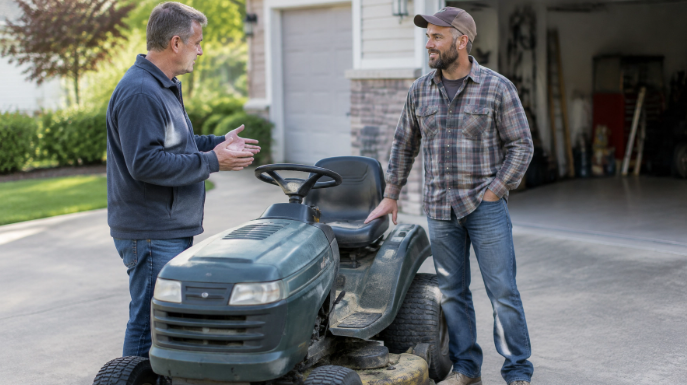
- Featured image idea: A professionally photographed buyer and seller talking beside a used riding mower in a driveway, with a clearly transactional scene, clean commercial composition, and natural daylight.
- Featured image alt text: Buyer and seller talking beside a used riding mower in a driveway
- CTA: Browse used mowers from private sellers and dealers on LawnMowerClassifieds.com.
Browse all mower listings from private sellers and dealers on LawnMowerClassifieds.com.