Buying Used Mowers
Riding Mower Rollover Safety: What Every Used Rider Owner Should Check First
Before buying or operating a used riding mower, check its rollover protection, seat belt, operator-presence controls, parking brake, and discharge guard. Then confirm the mower’s manual covers the terrain you plan to mow. Missing or bypassed safety equipment is a reason to pause the purchase until the correct repair is confirmed.
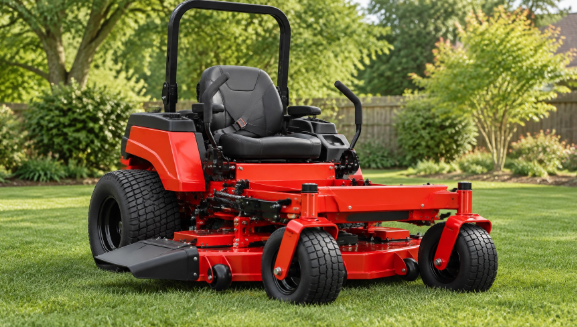
Riding Mower Rollover Safety: What Every Used Rider Owner Should Check First
Before buying or operating a used riding mower, check its rollover protection, seat belt, operator-presence controls, parking brake, and discharge guard. Then confirm the mower’s manual covers the terrain you plan to mow. Missing or bypassed safety equipment is a reason to pause the purchase until the correct repair is confirmed.
Riding mower rollovers remain a recognized hazard. OSHA’s guidance on riding mower rollovers explains why ROPS, seat belts, and slope limits matter, particularly for commercial operators. These checks are also useful when assessing used riding lawn mowers for home or small-business use.
Inspect Safety Equipment Before Buying
Used riders may have years of wear, repairs, or modifications. Safety parts can be overlooked even when the engine and deck appear to work. Ask for the make, model, serial number, and owner’s manual. Use those details to check which safety features came with that exact mower and how to test them.
| What to Check | Why It Matters | Red Flags |
|---|---|---|
| ROPS and mounting points | Helps protect the operator during a rollover when used as designed | Missing bar, bends, cracks, loose or damaged mounts |
| Seat belt and buckle | Used with an approved ROPS, it helps keep the operator in the protected area | Missing belt, damaged webbing, faulty buckle, improvised replacement |
| Operator-presence switch and interlocks | Helps stop blades or prevent starting in unsafe conditions | Controls that do not work, have been bypassed, or behave inconsistently |
| Parking brake | Helps keep the mower stationary when parked | Mower moves during a level-ground check; damaged linkage |
| Discharge deflector and guards | Helps keep feet and debris away from the blade area | Missing, broken, tied up, or unsecured parts |
Check the ROPS and Seat Belt
A rollover protection structure, or ROPS, is a protective bar or frame designed for certain mower models. It is not a guarantee against injury, and it does not make steep or unsuitable terrain safe. Check the owner’s manual to find out whether the mower was built for a ROPS, whether the structure is fixed or foldable, and how it should be used.
Look over the bar, its mounting points, and the surrounding frame. Do not accept a bent or cracked structure, damaged fasteners, or evidence of improvised repairs. If a ROPS is missing, confirm with the manufacturer or an authorized dealer whether an approved replacement or retrofit is available. Do not fabricate one or install an unapproved part.
When a mower is designed to use a ROPS and seat belt, follow the manual’s instructions for using them together. If the ROPS can be folded for clearance, check the manual for when it may be folded and how to restore it to its operating position. Do not assume a folded bar provides rollover protection.
Test the Seat Switch and Start Interlocks Safely
Operator-presence systems and start interlocks vary by model. The manual should explain what should happen when the operator leaves the seat, engages the blades, or attempts to start the mower.
Ask the seller to demonstrate these functions using the manual’s procedure. Keep the mower on level ground, clear the area around the deck, and keep other people away. Do not reach toward moving parts or deliberately step off a running mower to test it. If a control fails, has been tied down, or appears bypassed, do not operate the mower until it has been inspected and repaired correctly.
Check the Parking Brake, Blade Controls, and Guards
On level ground, follow the manual’s procedure to check whether the parking brake holds the mower. Look for worn or damaged linkage, cables, pedals, or levers. Do not test the brake on a slope.
Ask for a demonstration of the blade engagement and stop controls. The expected behavior depends on the model, so use its manual rather than assuming all mowers work the same way.
Check that the discharge chute or deflector is present, secure, and in its intended position. Inspect other deck and belt guards for damage or missing fasteners. Do not buy a mower on the assumption that missing guards are optional accessories.
Operate on Slopes With Care
Read the mower’s manual before mowing any slope. The safe method and limits depend on the mower’s design, tires, attachments, and terrain. A riding tractor and a zero-turn mower may handle a slope differently. Follow the instructions for the specific machine; do not treat a ROPS as permission to mow beyond its limits.
For the first use, inspect the ground on foot. Look for wet grass, loose soil, holes, steep banks, ditches, retaining walls, and other hazards. If the ground is slippery or the slope exceeds the mower’s guidance, choose another method or leave that area unmowed.
Some manuals for conventional riding mowers direct operators to mow up and down slopes rather than across them. That is not a universal rule for every rider. Check the manual, travel slowly, avoid sudden turns, and never make abrupt speed or direction changes on a slope. Do not mow wet slopes.
Keep People and Objects Away
Walk the mowing area before starting. Pick up stones, branches, wire, toys, and other objects that could be struck or thrown. Keep children and bystanders well away from the mower, and never carry passengers. Children should stay indoors or in a secure area where the operator can’t mistake their location.
Use the mower’s guards and deflector as intended. Keep hands and feet away from the deck and discharge opening, including when the blades are off but still moving. Stop the mower and wait for moving parts to stop before clearing debris or checking the deck.
The CPSC’s mower safety guidance covers consumer precautions such as clearing the mowing area and keeping people away from moving blades and discharge openings. Those habits apply whether the mower is new or used.
Fuel, Maintain, and Store the Mower Safely
Refuel outdoors with the engine off and cool. Keep fuel away from sparks, flames, and other ignition sources. Follow the manual for fueling and storage, and clean up spills before starting.
Keep blades sharp and in good condition, and have damaged blades repaired or replaced as directed by the manufacturer. Before maintenance, park on level ground, disengage the blades, remove the key, and follow the manual’s steps to prevent accidental starting. Use appropriate protection when handling blades. Never work beneath a raised deck unless it is supported as instructed.
When storing the mower, lower attachments, set the parking brake, switch off the engine, remove the key, and wait for moving parts to stop. Store it where children cannot access the controls or fuel.
Use a Safety Checklist for Every Used Riding Mower
Before completing a purchase or mowing for the first time:
- Confirm the model and serial number, and find the correct owner’s manual.
- Inspect the ROPS, mounting points, seat belt, and buckle.
- Ask for a safe demonstration of the operator-presence system and start interlocks.
- Check the parking brake on level ground.
- Confirm the discharge deflector and required guards are in place.
- Review the manual’s slope and operating instructions.
- Walk the lawn and keep children, passengers, and bystanders away.
- Delay mowing if the ground is wet or the mower has an unresolved safety issue.
If a safety feature is missing, damaged, or unreliable, have the mower inspected and repaired with the appropriate parts before operating it.
Find a Used Riding Mower
Compare used riding mowers for sale and browse all mower listings on LawnMowerClassifieds.com. You can also compare used zero-turn mowers if you are considering a different mower type. Private sellers can list a mower free.