Buying Used Mowers
How to Price a Used Lawn Mower (and Actually Get It Sold)
There is no single online calculator that gives you the right price for a used lawn mower. A realistic asking price comes from comparing similar mowers in your area, then adjusting for hours, condition, maintenance records, deck and drive condition, and the season.
How to Price a Used Lawn Mower (and Actually Get It Sold)
There is no single online calculator that gives you the right price for a used lawn mower. A realistic asking price comes from comparing similar mowers in your area, then adjusting for hours, condition, maintenance records, deck and drive condition, and the season.
Price too high and buyers may stop responding. Price too low and you may leave money behind.
Use this process to set a defensible asking price for a riding mower, zero-turn, commercial mower, or other outdoor power equipment.
Start With Comparable Mowers
The most useful starting point is what similar mowers are currently listed for in your region.
Search for equipment with the same or similar:
- Type of mower
- Brand and model
- Model year or age
- Deck size
- Hour count
- Residential or commercial design
- Operating condition
- Included attachments
Current listings help show the market range, but remember that an asking price is not the same as a completed sale. A mower can remain listed for weeks or months at a price buyers will not accept.
Look for patterns instead of copying one listing. Compare several similar mowers and remove obvious outliers, such as a nearly new machine, a non-running mower, or a listing with unusually high hours.
Browse all mower listings to see how different mower types and conditions are presented in the marketplace.
Read the Listing Range Honestly
The lowest listing is not always a bargain. It may have missing parts, mechanical problems, weak tires, deck damage, or an unclear history.
The highest listing is not always the value standard. It may reflect unusually low hours, excellent records, recent service, included attachments, or a seller willing to wait.
Build your baseline from mowers that are genuinely comparable. If most similar machines are clustered in one range, that range is more useful than a single high or low listing.
Adjust the Price for Condition and Equipment Details
After finding a baseline, adjust the price based on what a buyer will inspect and what a buyer may need to repair.
| Condition or feature | Pricing effect | What to check |
|---|---|---|
| Maintenance records | Supports a stronger asking price | Oil changes, belt work, blade service, major repairs |
| Recent major service | Can support a higher position within the range | Documented service and parts replaced |
| Low hours for the mower type | May support a higher price | Compare hours with similar residential or commercial machines |
| Original manuals and attachments | Adds useful value | Manuals, bagger, extra blades, mulch kit, cart |
| Indoor storage | Supports buyer confidence | Less rust, weather exposure, and storage damage |
| Deck rust or weld repairs | Pushes the price down | Thin metal, cracks, patched areas, damaged spindles |
| Weak or noisy hydrostatic drives | Can reduce value substantially | Uneven movement, whining, slipping, slow engagement |
| Unknown service history | Creates pricing uncertainty | No records, unclear ownership, overdue maintenance |
| Non-running or needs-work condition | Requires a lower asking price | Engine, electrical, fuel, deck, transmission, or tire issues |
| Missing parts | Reduces immediate usability | Guards, belts, battery, seat, discharge chute, controls |
A buyer mentally deducts expected repairs. That deduction may be larger than the actual parts cost because the buyer is also considering time, transportation, diagnostic work, and the risk that another problem appears.
A mower with documented maintenance and a working deck may deserve a stronger position than a similar mower with fewer hours but no service history. Price the complete condition, not just the hour meter.
What Moves the Price Up
Certain details make a used mower easier to evaluate and may support a higher asking price within the local range.
Maintenance Records
Records show what has been done and when. Useful documentation can include:
- Oil and filter changes
- Blade sharpening or replacement
- Belt replacement
- Battery replacement
- Tire replacement
- Spindle or pulley repairs
- Hydrostatic transmission service
- Engine or carburetor work
Receipts are useful, but a clear written maintenance history also helps when receipts are not available.
Recent Major Service
A mower that recently received necessary service may be more attractive than one that is due for immediate work. State exactly what was completed rather than using a general phrase such as “fully serviced.”
Appropriate Hours
Low hours can help, but hours must be judged against the mower’s design. A residential mower and a commercial mower do not follow the same usage pattern.
A low-hour residential mower with heavy deck rust may be less attractive than a higher-hour machine that was stored indoors and maintained properly. Hours are one pricing factor, not the entire valuation.
Manuals and Attachments
Original manuals, a compatible bagger, extra blades, a mulch kit, or other useful attachments can make the mower more complete. Include these items in the price discussion only when they are present, functional, and relevant to the machine.
Residential and Commercial Mowers Use Different Pricing Logic
Do not compare a homeowner-grade riding mower directly with a commercial zero-turn or stand-on mower.
Residential mowers are commonly evaluated by:
- Age
- General condition
- Hours
- Deck condition
- Engine operation
- Expected repair needs
- Local homeowner demand
Commercial mowers are also evaluated by:
- Fleet maintenance records
- Service intervals
- Hydraulic and deck condition
- Operator use
- Commercial frame and component design
- Remaining uptime value
- Availability of replacement parts
A commercial mower with 1,500 hours can be worth more than a residential mower with 300 hours because the machines were built and used for different purposes. The commercial unit may have a stronger frame, larger cutting capacity, service records, and more useful production capability.
Compare commercial mowers with similar commercial mowers. Compare residential riding mowers with similar residential riding mowers.
For sellers of commercial equipment, include the hour meter reading, deck size, service history, fleet retirement reason, and any known repairs. Commercial buyers need those details to assess possible operating value.
Consider Brand and Parts Availability
Brand recognition can affect resale value, but it should not be the only factor in your pricing decision.
Buyers often consider how easy it is to find:
- Replacement belts and blades
- Filters and batteries
- Deck components
- Engine parts
- Hydrostatic components
- Local service
- Repair information
A mower with a strong local service network and commonly available parts may be easier to sell than a similar machine that is difficult to support. This is especially important for older equipment.
Use brand and model information to find accurate comparable listings. Do not assume that a familiar name automatically supports a high asking price. Condition, parts availability, hours, and local demand still determine the practical price.
Brands such as John Deere, Toro, Exmark, Scag, Cub Cadet, Hustler, Gravely, Ferris, and others may appear in the used equipment market. Lawn Mower Classifieds is not affiliated with or endorsed by these manufacturers.
Decide Whether to Repair Before Selling
Repairing a mower before listing can improve its possible resale value, but not every repair pays for itself.
Repair First When
A repair may make sense when:
- The problem is clearly diagnosed
- The part is reasonably available
- The repair restores a basic function
- The mower is otherwise in solid condition
- Buyers would otherwise classify it as non-running
- The repair cost is controlled and documented
Examples may include replacing a battery, installing a belt, repairing a simple fuel issue, or replacing a damaged discharge component.
Sell As-Is When
Selling without further repairs may be more practical when:
- The engine has major internal problems
- The hydrostatic drive is weak or noisy
- The deck requires extensive welding
- Multiple systems need attention
- The repair cost is uncertain
- The mower has significant rust or storage damage
- The equipment is better suited to a flipper or parts buyer
Be direct about the condition. “Needs work” should explain what is known, what has been tested, and whether the mower runs, drives, and cuts.
A buyer may accept a lower price for a project mower if the listing provides enough information to evaluate the repair risk.
Adjust for Regional Seasonality
Mower demand changes by region and time of year.
In northern markets, late fall and winter can bring fewer active buyers because mowing is no longer the immediate priority. A seller may need to allow more time, accept more negotiation, or price closer to the middle of the comparable range.
Late winter and spring may bring more search activity as buyers prepare for the mowing season. Current-season timing can support a stronger asking position when local demand is active.
Southern markets and other year-round mowing regions should not be treated the same way. Buyers may continue shopping for riding mowers, zero-turns, and commercial equipment throughout the year. Local weather, grass growth, storm damage, and lawn care demand can matter more than a nationwide seasonal assumption.
Set the price for the market where the mower is located. Consider broadening the listing area if the local buyer pool is limited.
Test the Price and Make Controlled Changes
A listing that receives no serious response provides useful pricing information, but do not change everything at once.
If there are no meaningful inquiries during the first week or two:
- Recheck the comparable listings.
- Confirm that your mower is being compared with the correct type and condition.
- Add missing details about hours, service, repairs, and included equipment.
- Improve the condition description without repeating the general listing advice in [INTERNAL LINK: our mower listing mistakes guide].
- Consider whether the photos accurately show the mower’s condition.
- Widen the search area if transportation is practical.
- Adjust the price in a staged, controlled amount.
- Reconsider the season and local demand.
A small, deliberate price change is easier to evaluate than a series of random reductions. Keep notes on inquiries and offers so you can see whether buyers object to the price, the condition, the location, or the lack of information.
Handle Offers Without Giving the Mower Away
Set three numbers before publishing:
- Asking price: the public starting point.
- Acceptable price: the lowest amount you would reasonably take.
- Walk-away price: the point where selling no longer makes sense.
Leave room for normal negotiation without setting the asking price far above comparable equipment. A price that is not supported by the mower’s condition can reduce interest before a buyer ever makes an offer.
When a buyer makes an offer, ask what they are comparing it with and whether they have inspected the mower. Counter with specific information:
- Recent service
- Hours
- Included attachments
- Known repairs
- Deck or drive condition
- Comparable local listings
Do not hide a known problem to protect the price. Clear condition information supports a more productive transaction and reduces wasted appointments.
List Where Mower Buyers Are Searching
List the mower where buyers can search by equipment type, location, and condition. A specialized marketplace can make it easier to reach people looking specifically for lawn mowers and outdoor power equipment.
Private sellers can list a mower for sale free on LawnMowerClassifieds.com. Include the mower type, model, hours, condition, service history, included equipment, location, and a price based on comparable listings.
For sellers comparing their equipment with current inventory, browse used riding lawn mowers for sale or used zero-turn mowers for sale before setting the asking price.
Set a Defensible Price and List the Mower
To answer “how much is my used lawn mower worth,” start with comparable local listings. Then adjust for condition, hours, service records, residential or commercial design, parts availability, attachments, storage, and regional timing.
There is no universal price for every mower. A defensible asking price is based on comparable equipment and a complete description of what the buyer is actually getting.
When the price is ready, list your mower free on LawnMowerClassifieds.com.
SEO Package
Article Title: How to Price a Used Lawn Mower (and Actually Get It Sold)
Recommended Slug: how-to-price-a-used-lawn-mower
Category: Selling Mowers
Primary Keyword: how to price a used lawn mower
Secondary Keywords: how much is my used lawn mower worth, used riding lawn mowers for sale, lawn mowers for sale by owner, used riding lawn mowers, used zero turn mowers for sale
Search Intent: Informational and transactional
Target Audience: Private homeowners, mower flippers, lawn care businesses liquidating equipment, private sellers listing outdoor power equipment, and dealers evaluating trade-ins
Excerpt: Learn how to price a used lawn mower using comparable listings, hours, condition, service records, mower type, regional demand, and seasonality. Then list your mower free on LawnMowerClassifieds.com.
SEO Title: How to Price a Used Lawn Mower and Get It Sold
Meta Description: Learn how to price a used lawn mower by comparing local listings and adjusting for hours, condition, service history, mower type, and seasonality.
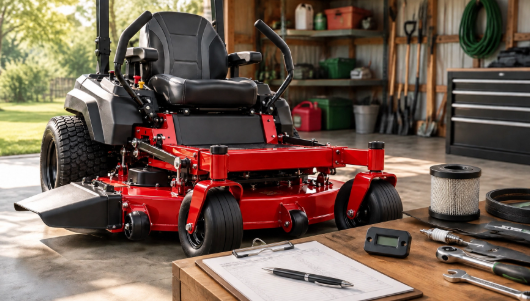
Featured Image Idea: A used riding mower in a clean equipment shed with maintenance records, an hour meter, and service tools visible nearby.
Featured Image Alt Text: Used riding mower with maintenance records in an equipment shed
Suggested Internal Links:
- Browse all mower listings
- Used riding lawn mowers for sale
- Used zero-turn mowers for sale
- List your mower for sale
CTA: List Your Mower FREE on LawnMowerClassifieds.com